Monday, February 20, 2006
Game theory and Pecking order
Only recently did I come across game theory and all its applications. Nowadays I see it everywhere. Pecking order is an application I read recently.
Pecking order is a theory of corporate structure. It says firms follow an order for pecking money- internal finances first, then debt and issue shares as a last resort. Debt is always preferred over equity, no matter what.
The theory assumes asymmetric information- managers know more than investors. This is easier to see. When a big announcement comes, share price spurts. If investors knew as much as managers, this would not happen. Investors would’ve bought all shares in anticipation.
When manager thinks shares are undervalued, he should prefer debt- why issue more shares when they are traded at below fair value? On the contrary, they prefer equity when shares are overvalued- make hay while the sun shines.
Why then do they prefer debt always? The answer lies in game theory, the theory of choices where decisions players make affect one another. Suppose the firm issue equity to raise money (to make hay). Investors anticipate trouble and share prices fall, sometimes more than what it should. On the other hand, when debt is issued, share prices rise.
Now manager anticipates this behavior and considers he is better off issuing debt, even if shares are overvalued. Why not let bad news go to investors through other channels? So he issues debt no matter what. But does share prices rise? Not always. Why? Investors anticipate manager’s behavior, so they have no clue as to whether shares are over/under valued.
The conclusion of game theory reinforced in this example is this: A system where rational players operate rapidly evolves to a point where no one is better or worse off.


Thursday, February 16, 2006
Blogger’s dilemma
Let’s cross-link our blogs, my friend tells me. What does that mean, I ask him. You put my link on your blog and me, you. So what happens? We will get each other’s readers. It increases our hits.
Confused, I ask him. Increase hits? Why should we increase hits? If we increase hits, it means our blog is popular, he explains. Hey, I can understand what it means, but is that the reason why we blog, to become popular? He seems exasperated. Well, hmmm, if you don’t want popularity, why don’t you have a personal diary instead? I couldn’t think of an answer, and said as much.
We moved on to other things. After a while I tell him, I don’t blog regularly. How will I increase hits, even if I crosslink? Well, if you want to become popular, you have to blog atleast once in two days. Put your link in orkut groups, chat messages and mailgroups…learn to network, he advises me. I thank him for the enlightening discussion.
A blogger’s dilemma is this- he blogs because he wants others to read it, but the more readers he gets, the more pressure he is under…what can I change to make this post more readable?, This is interesting, may be posting this will get me more hits, etcetera. Suddenly, there are no uninhibited feelings, ideas, and thoughts; only conformity.
So what is my final take? I write blogs because I do want others to read it. But I don’t like to push it. I don’t like to worry about losing readership just because I don’t blog regularly.
When someone stumbles onto my blog, reads it and puts a comment ‘nice one’, I do feel pleased. In fact I used to get a lot of 'nice ones' before. Unfortunately they were invariably follwed by messages like how to enlarge your, well, stock returns.
Friday, February 10, 2006
How about Casio sponsoring Exams?
Mid term exams of term3 started today. Financial management II. I could have taken the exams last term and still performed the same way. There was nothing conceptual, all calculations.
NPV (net present value) is the most basic of all financial calculations; and the most intensive. There is supposedly a table which simplifies the calculation, but the professor thought we had enough time. So there we were, doing NPV for 20 years for different rates, by trial and error. Imagine using both hands on calculator
May be we could have casio sponsoring our exams. We can even have commercial breaks ‘You will solve the next question after these messages from our sponsor’. The way papers are being set, that looks a distinct possibility.
NPV (net present value) is the most basic of all financial calculations; and the most intensive. There is supposedly a table which simplifies the calculation, but the professor thought we had enough time. So there we were, doing NPV for 20 years for different rates, by trial and error. Imagine using both hands on calculator
May be we could have casio sponsoring our exams. We can even have commercial breaks ‘You will solve the next question after these messages from our sponsor’. The way papers are being set, that looks a distinct possibility.
Thursday, January 26, 2006
How do Chennai-ites quarrel over water?
Game theory and its implications is one subject that never fails to amaze me by both its simplicity and profoundness. The recent Nobel Prize in economics awarded to Robert Aumann, a mathematician based in Jerusalem and Thomas Schelling, an American economist for their work in game theory highlights the richness and diversity in this subject.
Game theory is a theory of choice, where decisions players make affect one another. Aumann’s contribution is that cooperation between players is possible if the game prolongs infinitely often, but players compete if the game goes for a finite period of time. How?
Coming from a water starved city like Chennai, let me quote a normal quarrel that happens between neighbors: the bore-well problem. Suppose our neighbor installed a bore-well and a booster pump, which sucks up water twice as fast as the normal pump. When both of us had normal pump, we got 10 liters of water each. Now that he has a booster pump and we don’t, he gets 15 liters and we get none. (Assuming 5 liters gets wasted when booster pump sucks water furiously).So we have no option but install bore-well ourselves, and now both of us end up getting 5 liters each. (5 liters wasted per pump)
In the long term, this is a suboptimal solution (5 vs. 10). So we enter into an agreement where either of us won’t switch booster pump unless the other person switches it on the previous day.
Thus, if the game goes on infinitely, the players cooperate. What if the game is for finite interval? Suppose our neighbor vacates his place next Sunday, he will switch on the last day, because he has no motivation to do otherwise. Anticipating this, I’ll switch the motor on Saturday, which he anticipates on Friday…and the entire thing unravels.
Schelling’s work is on the formal theory of deterrence and retaliation, where paradoxically, the player is better off by making his response uncertain. The Spanish general Cortez who colonized Mexico burnt his boats on arrival demoralizing his adversaries because they knew that his army could not retreat.
The works of Aumann and Schelling demonstrates the subject’s breadth and depth.
Game theory is a theory of choice, where decisions players make affect one another. Aumann’s contribution is that cooperation between players is possible if the game prolongs infinitely often, but players compete if the game goes for a finite period of time. How?
Coming from a water starved city like Chennai, let me quote a normal quarrel that happens between neighbors: the bore-well problem. Suppose our neighbor installed a bore-well and a booster pump, which sucks up water twice as fast as the normal pump. When both of us had normal pump, we got 10 liters of water each. Now that he has a booster pump and we don’t, he gets 15 liters and we get none. (Assuming 5 liters gets wasted when booster pump sucks water furiously).So we have no option but install bore-well ourselves, and now both of us end up getting 5 liters each. (5 liters wasted per pump)
In the long term, this is a suboptimal solution (5 vs. 10). So we enter into an agreement where either of us won’t switch booster pump unless the other person switches it on the previous day.
Thus, if the game goes on infinitely, the players cooperate. What if the game is for finite interval? Suppose our neighbor vacates his place next Sunday, he will switch on the last day, because he has no motivation to do otherwise. Anticipating this, I’ll switch the motor on Saturday, which he anticipates on Friday…and the entire thing unravels.
Schelling’s work is on the formal theory of deterrence and retaliation, where paradoxically, the player is better off by making his response uncertain. The Spanish general Cortez who colonized Mexico burnt his boats on arrival demoralizing his adversaries because they knew that his army could not retreat.
The works of Aumann and Schelling demonstrates the subject’s breadth and depth.
Wednesday, January 18, 2006
I love orkut!
Do I have to tell you what orkut is? It’s popular software for networking with friends. As I am a slow adapter to new technology, it took so long for me to appreciate it. Appreciate? I couldn’t have enough of it. Met some long forgotten school friends, and felt we were never away.
Profile? Naah, I don’t believe in writing about myself. After all I have a blog to do that. But one thing I like about orkut is the testimonial. People don’t just love, but crave to hear what others, particularly their friends think of them. You may not be Wordsworth, but do write a couple of lines about them, good and bad. They will really appreciate it.
Happy scrapping!
Profile? Naah, I don’t believe in writing about myself. After all I have a blog to do that. But one thing I like about orkut is the testimonial. People don’t just love, but crave to hear what others, particularly their friends think of them. You may not be Wordsworth, but do write a couple of lines about them, good and bad. They will really appreciate it.
Happy scrapping!
Tuesday, January 17, 2006
Big is beautiful
We live in an era of transnational, the likes of Wal-Mart, Exxon, Microsoft and Toyota, (mega institution is one which earns more than 10 billion dollars in revenues annually and has more than 100000 employees worldwide). In the last few years, the trans-nationals have managed to earn more revenue per worker than the smaller companies, and improve its profit margins dramatically. Companies like Microsoft and Exxon has managed to improve its profitability without any drastic increase in workforce, while companies like HSBC, GE, Toyota and IBM has managed to increase the profitability faster than the increase in workforce. There are 4 companies (Toyota, GE, Citigroup, and IBM) that employ more than 200000 people and earn 20000 dollars or more per employee (McKinsey studies). These companies have managed to overcome the complexity that comes along with size and grow faster their smaller peers. How?
The companies previously were leveraging their scale and scope to control supply chains and means of production. Ford, which took economies of scale to an extreme, at one point of time owned rubber plantations in Amazon for tires, rail wagons to transport them, tire, steel and assembly plants and planned eventually to sell and service Ford cars (though they never did). This proved a disaster.
Now companies are not just selling of their loss making units, but selling off their reasonably profitable ones as well, in preference to their high margin businesses. Citigroup sold off its cash cow Travelers insurance business to Met-life to concentrate on their core banking business. GE, which were traditionally manufacturing, gathered sufficient experience in financial services and now predominantly a services company. So is, IBM, which is moving away from manufacturing (at one point of time, it got a measly 1% ROI on its manufacturing business) to business consulting. It is rumored that in Japan, Toyota intends to market its manufacturing consultancy to non-car companies.
The more significant move was to find and tap the knowledge base of the people. Rockefeller found it difficult to find people who knew even basic accounting and awareness of most commonly used business terms. That is hardly the case today. Companies are trying to make sure they make the systems simple and management decisions consistent so that the ideas of employees aren’t lost in the bureaucratic maze.
The big is beautiful in India too, it’s the big Indian IT companies like Infosys and Wipro that are clocking faster growth in workforce and bottom-line than their smaller counterparts.
What do mega-institutions mean to India? IT companies are thinking about relocating abroad due to skills crunch, even when there are 5.3 million unemployed grads at home. If Infosys has any chance of becoming an Accenture or IBM, the government must make sure that there are employable graduates in the country. Already, the services are raising their headcount faster than any other sector. It’s high time the supply steps in.
Cheap workforce like China’s is not the recipe to superpower status, quality workforce is.
The companies previously were leveraging their scale and scope to control supply chains and means of production. Ford, which took economies of scale to an extreme, at one point of time owned rubber plantations in Amazon for tires, rail wagons to transport them, tire, steel and assembly plants and planned eventually to sell and service Ford cars (though they never did). This proved a disaster.
Now companies are not just selling of their loss making units, but selling off their reasonably profitable ones as well, in preference to their high margin businesses. Citigroup sold off its cash cow Travelers insurance business to Met-life to concentrate on their core banking business. GE, which were traditionally manufacturing, gathered sufficient experience in financial services and now predominantly a services company. So is, IBM, which is moving away from manufacturing (at one point of time, it got a measly 1% ROI on its manufacturing business) to business consulting. It is rumored that in Japan, Toyota intends to market its manufacturing consultancy to non-car companies.
The more significant move was to find and tap the knowledge base of the people. Rockefeller found it difficult to find people who knew even basic accounting and awareness of most commonly used business terms. That is hardly the case today. Companies are trying to make sure they make the systems simple and management decisions consistent so that the ideas of employees aren’t lost in the bureaucratic maze.
The big is beautiful in India too, it’s the big Indian IT companies like Infosys and Wipro that are clocking faster growth in workforce and bottom-line than their smaller counterparts.
What do mega-institutions mean to India? IT companies are thinking about relocating abroad due to skills crunch, even when there are 5.3 million unemployed grads at home. If Infosys has any chance of becoming an Accenture or IBM, the government must make sure that there are employable graduates in the country. Already, the services are raising their headcount faster than any other sector. It’s high time the supply steps in.
Cheap workforce like China’s is not the recipe to superpower status, quality workforce is.
Saturday, January 14, 2006
Evolution of CP
CP means class participation. You may think that it’s such a frivolous topic and the person must really be jobless to write on it. But it will amaze you that it’s one of the hottest topics in IIM.
If you have a question, you raise it, don’t you? It’s much more complicated than that. One, we have a system that rewards CP albeit a small cut in total (5%). Then you have a suspicious bunch of fellows who frown on anything more than acceptable level of CP (though the question of what is acceptable is as yet unresolved); To complicate matters further, a professor who mistakes CP as interest in his class and addresses the rest of the session to you, so there is loss of opportunity to do productive work, like snooze.
What do you do in this dynamic environment? This must be the evolution of CP.
Stage 1: Dumb/Passive CP: This is the lowest level. Here, you do a CP to clear your doubts. Unfortunately, yours truly is at this stage. ‘Sir, I don’t understand this’, ‘Could you repeat that?’ and so on. The advantage is that you don’t face jealous friends, if anything you get a lot of sympathy. Poor chap can’t get this one. Disadvantage, showing ignorance is nothing to be proud of.
Stage 2: Frivolous CP: At least here, you recognize that you want the cut, but you make such frivolous comments which annoy classmates. Whatever question is posed, you give a lot of chaff.
Advantage: Most of the time the prof is confused. He neither accepts nor rejects what you said. Disadvantage: Face the wrath of your buddies.
Stage 3: Intuitive/perceptive CP: Here you try to predict what prof is about to say next, and ask the question ‘what about…’ whatever he was about to say. Now, prof is real impressed. But if you can predict his next line, so can others. They will sulk, if not annoyed.
Stage 4: Strategic CP: Here, you paraphrase what prof said or agree with him without making it too obvious. Eg. When communication prof said ‘Write clearly and precisely’ Tomer replied ‘Yes Sir, this is something everyone say but no one follows’. As such, you can’t call that a CP. You tend to ignore it. So there is no ill will among the buddies. But, at a psychological level, you reaffirm what professor said. He doesn’t reply, but forms a very positive view of Tomer. This is the highest level of CP which everyone should try and achieve.
Friday, January 06, 2006
Happy new year
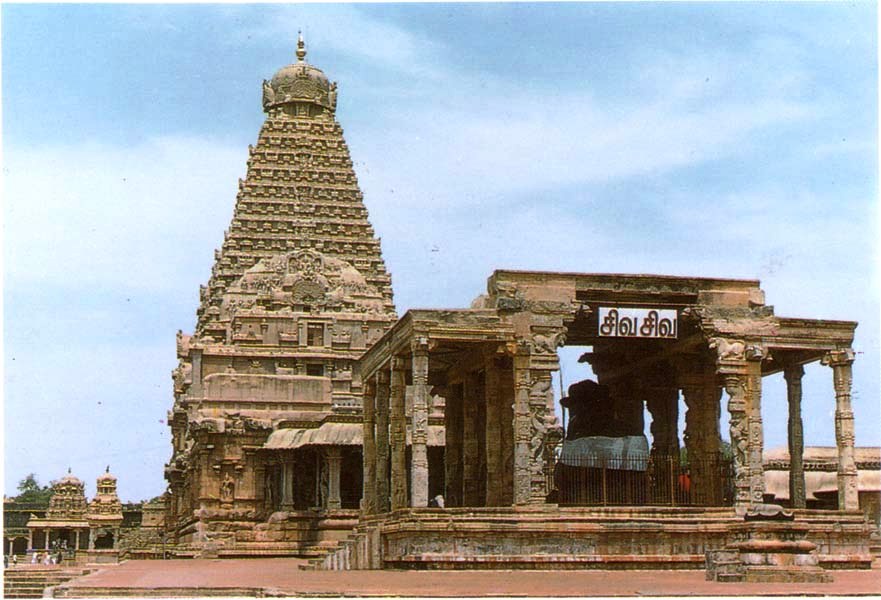
Well, it’s been almost a fortnight since I wrote something. As if I do nothing more than stay in my room and vegetate. It’s almost true, but I did do something this Jan 1st.
A 21 year old going on a pilgrimage in south India on the new year eve instead of partying all night may sound too conservative, or price you pay for being born to a religious parents, or is it?
Temples aren’t just places of worship. They are a gentle remainder that we mortals, who revel in our technological achievements, couldn’t build things which last a century or a plane crash; Remainder that we mortals aren’t capable of thinking beyond our present, leave alone a millennium; that we still aren’t able to bring the best out of human potential that a Rajaraja chola could. Mere rewards couldn’t have produced these temples.
Some ‘experts’ say that the kings in south India amputated the architects after they constructed these temples, so that they couldn’t be replicated. It’s hard to believe that any of these masterpieces could have been constructed in a cruel ruler’s time. You can control a man’s hand, not his spirit.
We visited our small ancestral temple at thandanthottam near Tanjore, which finds a mention in Sundarar padigams (hymns) which dates the temple to atleast 8th century AD. The temple is now dilapidated and cries for attention, and only recently has some work started. Rich temples like tirupathi should donate funds to such temples, instead of going on building newer temples, which are basically cash cows for them.
We then visited Tanjore Brihadeeshwara temple or big temple as it's popularly known, is one of the architectural wonders of the world and Unesco’s world heritage site.
What is so special about this temple? The 10th century temple (shown in picture) is constructed in such a way that its shadow doesn’t fall on the ground, no matter what time of the day it is. Also, the cupola (dome) is carved out of a single stone weighing 82 tonnes moved along an inclined plane 6 kms long.
Nandi (the bull facing the temple in the picture is 12 feet high, 19.5 feet long and 18.25 feet wide and carved out of a 25 ton stone.) is the vehicle of Lord Shiva, and supposedly the head of the ghosts who worship him. All temples before this one had a small nandi. Legend has that Rajaraja chola wanted a temple and a nandi that is mighty, because no ghosts fear a puny nandi! So the temple rightfully came to be known as big temple.
So my pilgrimage is not essentially one of religious nature, but that of a curious visitor who has never become used to such marvels as to not gape in amazement. The pictures painted in the inner walls had long stood the test of time, but when I went there, there were scribbling on the pictures like X loves Y, Z came here on so-and-so date (!) by our mortal peers, who wanted to immortalize their whatever. May their souls rot in hell.
Happy new year.
Thursday, December 22, 2005
Presentation week
The DWO presentation and its run-up was a hopeless one. We hadn’t got the report ready by the time we had our presentation, we over shot the time by whopping 20 mins (twice the stipulated time- at least, everyone overshot by similar margin).
The presentation itself wasn’t bad. We had used rhetoric language (what else do you use in a HR course?) in some of the slides, and the professor asked, ‘these are all well, tell me the mechanics?’ Everyone tried explaining, and he wasn’t happy. I tried this- ‘Sir, we’ll design systems which will elicit the desired response from our employees’, which in effect means saying nothing. But the professor seemed to be quite satisfied with the reply. Whoosh goes the logic.
There were minor quibbles after the presentation and I stayed away from it.
Economics presentation was much better. We had put in our presentation this bullet- the change of the base year is one of the reasons why our fiscal deficit shows a smaller figure than it actually is’. Prof asks how. Ramanan said something which the professor dismissed summarily. After the presentation, I asked him how it really happens. Professor says ‘It’s really hazy. Why don’t you mail me the source so that I can figure it out?’ Ah, the self-righteous souls.
Marketing presentation, well Sounak thought Shakti was in our group (he generally is) and prepared his slides. But alas we realized it only the last moment. I was given the task of saying the part impromptu. I managed it anyway.
Its Operations management course again. Well, the senile old man at least gave a Quantitative, application oriented paper last time. This time it was qualitative (lacks quality though).
We knew it was qualitative this time; we tried to mug Deming’s 14 points, 5S principles, 7 tools of TQM, few models etc. etc... I generally make all course notes in the same book. On some days, I hadn’t written the subject name on top of the notes, and yesterday, I had a tough time figuring out if the notes belong to OM or DWO (HR subject).
Questions? Features of TQM, TPM, well, the professor must be bored himself when he sat down to set the paper. So are we.
The presentation itself wasn’t bad. We had used rhetoric language (what else do you use in a HR course?) in some of the slides, and the professor asked, ‘these are all well, tell me the mechanics?’ Everyone tried explaining, and he wasn’t happy. I tried this- ‘Sir, we’ll design systems which will elicit the desired response from our employees’, which in effect means saying nothing. But the professor seemed to be quite satisfied with the reply. Whoosh goes the logic.
There were minor quibbles after the presentation and I stayed away from it.
Economics presentation was much better. We had put in our presentation this bullet- the change of the base year is one of the reasons why our fiscal deficit shows a smaller figure than it actually is’. Prof asks how. Ramanan said something which the professor dismissed summarily. After the presentation, I asked him how it really happens. Professor says ‘It’s really hazy. Why don’t you mail me the source so that I can figure it out?’ Ah, the self-righteous souls.
Marketing presentation, well Sounak thought Shakti was in our group (he generally is) and prepared his slides. But alas we realized it only the last moment. I was given the task of saying the part impromptu. I managed it anyway.
Its Operations management course again. Well, the senile old man at least gave a Quantitative, application oriented paper last time. This time it was qualitative (lacks quality though).
We knew it was qualitative this time; we tried to mug Deming’s 14 points, 5S principles, 7 tools of TQM, few models etc. etc... I generally make all course notes in the same book. On some days, I hadn’t written the subject name on top of the notes, and yesterday, I had a tough time figuring out if the notes belong to OM or DWO (HR subject).
Questions? Features of TQM, TPM, well, the professor must be bored himself when he sat down to set the paper. So are we.
Thursday, December 15, 2005
What is it to be a HR man?
I did a mediocre BE and had no strategy in my mind on how to pursue my goals, because there weren’t any. My mom said ‘Go do MBA’ and that resulted in a paradigm shift in my life.
I applied SWOT analysis on myself and scored high on 20 of the 23 variables I considered. Then I prepared a managerial effectiveness model and was better in global awareness and communication model, but scored poorly in self management competency. I then proceeded to get a 360 degree appraisal involving all stakeholders, to get both a subjective and objective analysis of myself.
I realized that the external environment was very complex that collaboration and not competition that is necessary. Therefore I was tempted to form a cross-functional team in my CAT exam hall to pool the skill sets and form a synergistic and organic relationship for handling complexity, like the CAT paper. But in a complex environment, ethics is more important than ever. So I did a cost-benefit analysis for competition vs. collaboration by a new model that I developed in the exam hall, and found that….
Sounak: Wake up, why are you sleeping over the DWO (Designing Work organization) book?
Everyone heading for second floor!
A couple of stex (student exchange) girls have come from Paris, and do they look gorgeous! What happens when they have trouble configuring the internet? Hey, no problems- I can lend a hand. When I went there, they, my classmates, were lined up in their rooms falling over each other to help the girls. I have a question.
Why doesn’t everyone except me have any suave? IIM ka naam roshan karenge!
Monday, December 12, 2005
FIIs are cold money!
Alright, once upon a time, there was a stock market marred by scams, insider trading and low depth. The government arrested bad guys, infused transparency and it coincided with a growth story. Lo and behold! Investors swarm like bees, the market never seems to cool off and aren’t we happy!
We would have, but for the government that is more tense and skeptical than ever, thinks that a lot of money is chasing a few papers, and even thinks about putting a cap on FII investment. And what’s the purported reason? FIIs are hot! err…. hot money.
Nothing is farther from the truth. True, every investor wants a good avenue for investment and will book profits when opportunity arises. But they aren’t hot money. One, they have invested mostly in blue chips and fundamentally sound mid caps, which don’t give return in the short term. Second, most of the newer FIIs are pension funds and Japanese investors, who have a longer perspective than even our own mutual funds. Third, they control so much stake (30-40% of the free float) that if they happen to pull out at once, the biggest losers will be they themselves.
Contrast this with our retail investors. Even when the sensex was rising, the market breadth remained largely negative. Why? Our retail investors try to ride the tide called penny caps which rise in a boom and end up losing a fortune. The government expends a lot of energy trying to track money and insider trading and even putting a cap on FII flows, to protect the investors from the fallout. But should the government try to protect the investors from the stupidity they themselves are responsible?
The only panacea for the market from overheating is to divest the PSUs to infuse quality paper in the market, and give the foreign investors to participate more in the debt market. Give them a chance to stay when the Feds hike rates.
Discouraging FII from participating in the growth story called India, while exhorting them for 150 billion dollars investment is one step forward, two backwards.
We would have, but for the government that is more tense and skeptical than ever, thinks that a lot of money is chasing a few papers, and even thinks about putting a cap on FII investment. And what’s the purported reason? FIIs are hot! err…. hot money.
Nothing is farther from the truth. True, every investor wants a good avenue for investment and will book profits when opportunity arises. But they aren’t hot money. One, they have invested mostly in blue chips and fundamentally sound mid caps, which don’t give return in the short term. Second, most of the newer FIIs are pension funds and Japanese investors, who have a longer perspective than even our own mutual funds. Third, they control so much stake (30-40% of the free float) that if they happen to pull out at once, the biggest losers will be they themselves.
Contrast this with our retail investors. Even when the sensex was rising, the market breadth remained largely negative. Why? Our retail investors try to ride the tide called penny caps which rise in a boom and end up losing a fortune. The government expends a lot of energy trying to track money and insider trading and even putting a cap on FII flows, to protect the investors from the fallout. But should the government try to protect the investors from the stupidity they themselves are responsible?
The only panacea for the market from overheating is to divest the PSUs to infuse quality paper in the market, and give the foreign investors to participate more in the debt market. Give them a chance to stay when the Feds hike rates.
Discouraging FII from participating in the growth story called India, while exhorting them for 150 billion dollars investment is one step forward, two backwards.
Incredible Rajnikant!
You got to read this
I love him for what he is.
http://people.indiatimes.com/quickiearticleshow/1328104.cms
I love him for what he is.
http://people.indiatimes.com/quickiearticleshow/1328104.cms
Wednesday, December 07, 2005
Don't let Economics override Technology
Middle path may be good for spiritual sake (heard of Raja-rishi model?), but when it comes to regulatory policies, it is not just frivolous but dangerous too. One such policy now is the government decision to have a combo of entry fee-revenue share model for 3G spectrum allocation. The rationale seems to be having an entry fee small enough for encouraging competition but high enough to avoid small inefficient players throwing their hats.
The underlying premise for entry fee is this- spectrum is scarce resource, so the government should give a strong dis-incentive for inefficient usage. So far so good, but something seems amiss- economics seems to have overridden technology.
Technology is fast making spectrum a scarce to an increasingly abundant resource. You may think that radio signals kind of bump into each other, so the electromagnetic spectrum has limits. Actually, it’s not the transmission that poses problems (though signals get weakened with distance), but the receivers aren’t sophisticated enough to differentiate one signal from other. This problem is getting fixed.
Wide band spectrum and spread spectrum (used in CDMA) is just one way of circumventing it- instead of confining the signal to a narrow band, spread the signal over broadband so that it mimics a guassian random signal, and have sophisticated error correcting receivers to decode them.
One of the emerging technologies is mesh networks. In this, the signal is passed through a network of receivers which receives the signal and passes them to adjacent receiver, giving the counter-intuitive result that the channel capacity increases with the number of receivers.
One more technology involves having cognitive ‘smart ‘radios having super-computing chips to receive the signals, which dramatically increases the signal capacity, as it decodes spectrally-close signals.
These and more are evolving, which will make the existing technologies obsolete. An entry fee may bring small fortune for the government, but decreases the Indian companies’ ability to adopt newer technologies when they arise. Revenue share model, where companies pay as they use would have been more appropriate.
Long live the middle path!
The underlying premise for entry fee is this- spectrum is scarce resource, so the government should give a strong dis-incentive for inefficient usage. So far so good, but something seems amiss- economics seems to have overridden technology.
Technology is fast making spectrum a scarce to an increasingly abundant resource. You may think that radio signals kind of bump into each other, so the electromagnetic spectrum has limits. Actually, it’s not the transmission that poses problems (though signals get weakened with distance), but the receivers aren’t sophisticated enough to differentiate one signal from other. This problem is getting fixed.
Wide band spectrum and spread spectrum (used in CDMA) is just one way of circumventing it- instead of confining the signal to a narrow band, spread the signal over broadband so that it mimics a guassian random signal, and have sophisticated error correcting receivers to decode them.
One of the emerging technologies is mesh networks. In this, the signal is passed through a network of receivers which receives the signal and passes them to adjacent receiver, giving the counter-intuitive result that the channel capacity increases with the number of receivers.
One more technology involves having cognitive ‘smart ‘radios having super-computing chips to receive the signals, which dramatically increases the signal capacity, as it decodes spectrally-close signals.
These and more are evolving, which will make the existing technologies obsolete. An entry fee may bring small fortune for the government, but decreases the Indian companies’ ability to adopt newer technologies when they arise. Revenue share model, where companies pay as they use would have been more appropriate.
Long live the middle path!
Sunday, December 04, 2005
Nothing ails Indian industry like conflict of interest
So there are reforms, competition and end of monopoly of PSUs in the Indian industry. Or is it?
A double standard, euphemistically called the conflict of interest still permeates in different forms. Take the case of telecom industry. TRAI, the regulator has been kept out of important decision like the interconnectivity issues in mobile phones with the minister vesting the powers with DoT, the biggest telecom provider. TRAI has been fighting this in Supreme Court for quite sometime now. While there was quite some heartburn in industry quarters over TRAI’s arbitrary handling of WLL issue, an arbitrary regulator is, dare I say it?- better than an arbitrary politician.
In oil, the government tried to inject Director General of Hydrocarbons, the head of upstream regulator into the board of ONGC, the state major. It was only after ONGC supreme Subir Raha threatened to resign did the government dropped the decision.
In banking, the regulator RBI holds a majority stake in SBI, the biggest Indian bank. Is this why foreign banks are prohibited to open more than their allotted number of branches? I don’t know, but it’s a food for thought.
There are innumerable instances like these, but the bottomline is- till there is a conflict of interest in the legislating body (government) also controlling the industry (via PSUs), it will permeate through the system. After all, the government owning a majority stake in PSUs puts the ministries in a fix- while the official position is reforms; they are responsible for the profits of state owned enterprises as well.
While the government has every right to protect the interests as a promoter, the correct approach is appointing more independent directors to manage the companies efficiently- not stifling the growth of industry by arbitrary decisions.
A double standard, euphemistically called the conflict of interest still permeates in different forms. Take the case of telecom industry. TRAI, the regulator has been kept out of important decision like the interconnectivity issues in mobile phones with the minister vesting the powers with DoT, the biggest telecom provider. TRAI has been fighting this in Supreme Court for quite sometime now. While there was quite some heartburn in industry quarters over TRAI’s arbitrary handling of WLL issue, an arbitrary regulator is, dare I say it?- better than an arbitrary politician.
In oil, the government tried to inject Director General of Hydrocarbons, the head of upstream regulator into the board of ONGC, the state major. It was only after ONGC supreme Subir Raha threatened to resign did the government dropped the decision.
In banking, the regulator RBI holds a majority stake in SBI, the biggest Indian bank. Is this why foreign banks are prohibited to open more than their allotted number of branches? I don’t know, but it’s a food for thought.
There are innumerable instances like these, but the bottomline is- till there is a conflict of interest in the legislating body (government) also controlling the industry (via PSUs), it will permeate through the system. After all, the government owning a majority stake in PSUs puts the ministries in a fix- while the official position is reforms; they are responsible for the profits of state owned enterprises as well.
While the government has every right to protect the interests as a promoter, the correct approach is appointing more independent directors to manage the companies efficiently- not stifling the growth of industry by arbitrary decisions.
Tuesday, November 29, 2005
Multi-level marketing or Multi-pain marketing?
There was a talk by the Amway MD on direct selling. Only one word could describe it- fabulous. It’s amazing how the industry interaction committee manages to bring in such speakers time after time. Hats off to you, folks!
The same couldn’t be said about the company. True, the direct-selling company has thrived for the past 46 years- no mean achievement. I believe it has done so because it has played on one unchanged aspect of humans- if there ever was one- greed.
I didn’t have an opportunity to see the Amway presentations that used to happen regularly in Chennai, but from whatever I heard; these people make such tall claims about compensation that you could drive only Merc and nothing else.
Is it that bad for a company to advertise itself to attract IBO- independent business agents? Not at all, and that’s not the aspect that I want to highlight anyway.
What else, then? Have you heard these hardcore investors talk? They somehow come to stock market the third minute of any conversation which will make you crawl for cover. Amway agents are worse. They start their propaganda first up, and won’t let you till they get an answer. They are the most hated people on earth; insurance agents come a distant second.
And how true are their claims? If you are aggressive, you may taste some success, but even if you do, what’s the point of making money on someone’s expense? And no profession unnerves such a lot of people to make a few bucks.
Amway products? My dad tried only one product- Amway car wash (a small bottle costs Rs.400). Dad was happy with the quality. But then Amway takes premium products to an extreme. My dad’s friend bought brand new Amway underwear with some special qualities which costs Rs.250. Without dwelling too much into the qualities, let me just add that his friend thought it was too costly to wear.
The concept is good- train some entrepreneurs who will be not just salespeople, but business partners who will get compensation based on not just their sales, but how many entrepreneurs they bring in. Unfortunately, it’s a perfect recipe for greed, generating multi-pain marketers.
Saturday, November 26, 2005
What do you do in your free time?
Incredible, isn’t it? A fortnight ago, I would’ve never thought that I would get some free time. Thanks to mela for index, I’ve two days off. I’m not part of any team there, so there isn’t any task to do. I thought I’ll doze a couple of days off.
Ah, easier said than done. Why not write a short paper? There’s no point trying my hand at fin or mark one. I chose a strategy paper- its easier to fool around- I did. Strategies for the Indian pharma firms in the post-product patent regime. There’s no dearth of information- there’s FICCI, CII and Mckinsey reports. It took longer than I thought, 10 hours in all. It’s tough to do it single. I ended up with a headache and finger-burn.
The theme is simple. Indian firms can’t copy drugs anymore- euphemistically called applied research! They have to invest like hell in R&D in basic research- some of them already doing that. Cost arbitrage is a short term measure- there are opportunities. Pfizer and Merck are outsourcing manufacturing, part research and clinical trials to India. In future, when countries like China start developing their human capital, these opportunities will cease to exist.
The constraints for the Indian firms are the financial muscle of the big majors. Therefore the strategies like generics exports and others are but a means to achieve the end- put a new drug on the market, which no Indian firm has done till date. It is important not to lose sight of this long term goal.
I’ll be lucky to go to the next round- only five entries get through. But then, philosophically speaking, the effort can be as satisfying as the end.
Ah, easier said than done. Why not write a short paper? There’s no point trying my hand at fin or mark one. I chose a strategy paper- its easier to fool around- I did. Strategies for the Indian pharma firms in the post-product patent regime. There’s no dearth of information- there’s FICCI, CII and Mckinsey reports. It took longer than I thought, 10 hours in all. It’s tough to do it single. I ended up with a headache and finger-burn.
The theme is simple. Indian firms can’t copy drugs anymore- euphemistically called applied research! They have to invest like hell in R&D in basic research- some of them already doing that. Cost arbitrage is a short term measure- there are opportunities. Pfizer and Merck are outsourcing manufacturing, part research and clinical trials to India. In future, when countries like China start developing their human capital, these opportunities will cease to exist.
The constraints for the Indian firms are the financial muscle of the big majors. Therefore the strategies like generics exports and others are but a means to achieve the end- put a new drug on the market, which no Indian firm has done till date. It is important not to lose sight of this long term goal.
I’ll be lucky to go to the next round- only five entries get through. But then, philosophically speaking, the effort can be as satisfying as the end.
Wednesday, November 23, 2005
Just another hit, or is it?
A manager of a distinguished petroleum company, the Indian oil corporation, blacklists a petrol pump for selling adulterated oil. The pump starts selling petrol on the sly, after a few days. When he tries to stop it, he gets five bullets on his chest. What if he happens to be my alumnus of 2003 batch? I’ve never heard of him, and, aren’t we used to murders?
The 27 year old Manjunathan happened to be one of the few bright spots of our country who dared fight our rotten system. A system controlled by corrupt officials-politicians-mafia nexus, a system which lacks transparency and accountability, a system which takes eons to punish offenders, a system people are so used to, that it fails to tickle them anymore than when Satyendra Dubey, an IIT engineer was killed by mafia when he whistle-blew the corruption in the national highway project an year ago. A system where there is no place for men of integrity, much less courage.
So what’s the purpose of more petitions or even a peace march which we are planning? Customary? Just to show that we are alive and kicking? I guess not.
There is only one alternative to this rotten system. We students, who will refuse to get brow-beaten by such acts, refuse to escape this by the time-immemorial-bushland offers, and strengthen our resolve to fight them. It’s no time for dejection, but action. Rest in peace, whoever you are.
Wednesday, November 16, 2005
What day comes after Saturday?
The mid term ends. After every paper I had said to myself ‘I’ll make up in the end term’. After all, I said a similar thing after my quizzes too, ‘I’ll make up in mid terms!’ Life goes on.
I don’t remember when I last had a Sunday. Last week it was placements, last to that was an extra classes, plus the mid terms eve, the only way I know its Sunday is when I get the appropriate newspaper supplement.
The mid term papers weren’t so bad; if it is; it’s bad for everyone, so relatively I’m not that bad off. (Whoa! The last line will qualify for PhD in verbosity! Blame my marketing and organizational design papers for that)
From this year CAT exam is going to get tougher. And number of seats in IIMs is being raised to 1400- which means still less than 1% of the 150000 entrants make it here. Hmmm... Sometimes life moves too fast to look back at your own achievements.
It’s been a while since I read anything worthwhile. Slow down your pace, life! Let me catch up.
I don’t remember when I last had a Sunday. Last week it was placements, last to that was an extra classes, plus the mid terms eve, the only way I know its Sunday is when I get the appropriate newspaper supplement.
The mid term papers weren’t so bad; if it is; it’s bad for everyone, so relatively I’m not that bad off. (Whoa! The last line will qualify for PhD in verbosity! Blame my marketing and organizational design papers for that)
From this year CAT exam is going to get tougher. And number of seats in IIMs is being raised to 1400- which means still less than 1% of the 150000 entrants make it here. Hmmm... Sometimes life moves too fast to look back at your own achievements.
It’s been a while since I read anything worthwhile. Slow down your pace, life! Let me catch up.
Thursday, November 10, 2005
Summer internship process
It’s finally over. What you see is a few IIMs getting placed in slot 0 with hefty packages. What you don’t is a majority who has to slog for 3 days flat out not knowing when it will get over, if it does. And a bunch of seniors who ran around satisfying weird needs of the obstinate HRs. Or for that matter, tons and tons of RG docs (resource generating documents) about the company. The last 3 days have taken a toll on everyone.
I screwed up a few interviews- one interviewer asked me what my group discussion topic was. I’d done close to 10 GDs that day, and had no clue what the topic was, and said as much. Another interviewer asked me, are you tired? It was 12 in the night, and I hadn’t slept for 18 hours, what do you think? I managed an artificial smile and asked him, aren’t you? You bet he was. He started telling me about how hard it was to shortlist 80 from 250 applications and do two rounds of interviews. Stop whining and get on. I managed to nod sympathetically. How many process have you gone through till now? I said around 8. He asked the name of the companies- I could recall around 4 or 5, but he pressed for all names, so I just took out the checklist I had from my coat pocket and read out. An embarrassed interviewer didn’t ask me, why our company!!!
Though around 70-80 companies came, only a small fraction shortlisted me, and I went through all the rounds of even smaller fraction. For three days I woke up at around 6 and went to bed as late as 1 in the night, only to wake up at 6 again. Damn it, I had no time to wash my socks. I thought, if worse came to worst, I would just take off my shoes in the GD and put everyone in a trance, and it would have been the elusive chemical weapon that Bush couldn’t find in Iraq!
Sounak was no better. The poor guy had calls right from day 0, and still managed to drag on the whole thing to day 4, and was even more tired and sick of the whole thing. He was sleeping before he was dragged to a couple of interview rooms, and I couldn’t imagine what he did there.
A few guys just broke down on the third day, after getting kicked out by one company after other. Some people tried to show that they didn’t care and went on watching Tom and Jerry shows, others porn, oblivious to the crowd there. I believe it’s another form, denial.
I managed to hang on to a company called DCM Shriram, an unglamorous fertilizer company for a rural marketing project. I’m glad it’s over; it may even be more interesting than I imagine, what the hell.
Subscribe to:
Posts (Atom)
